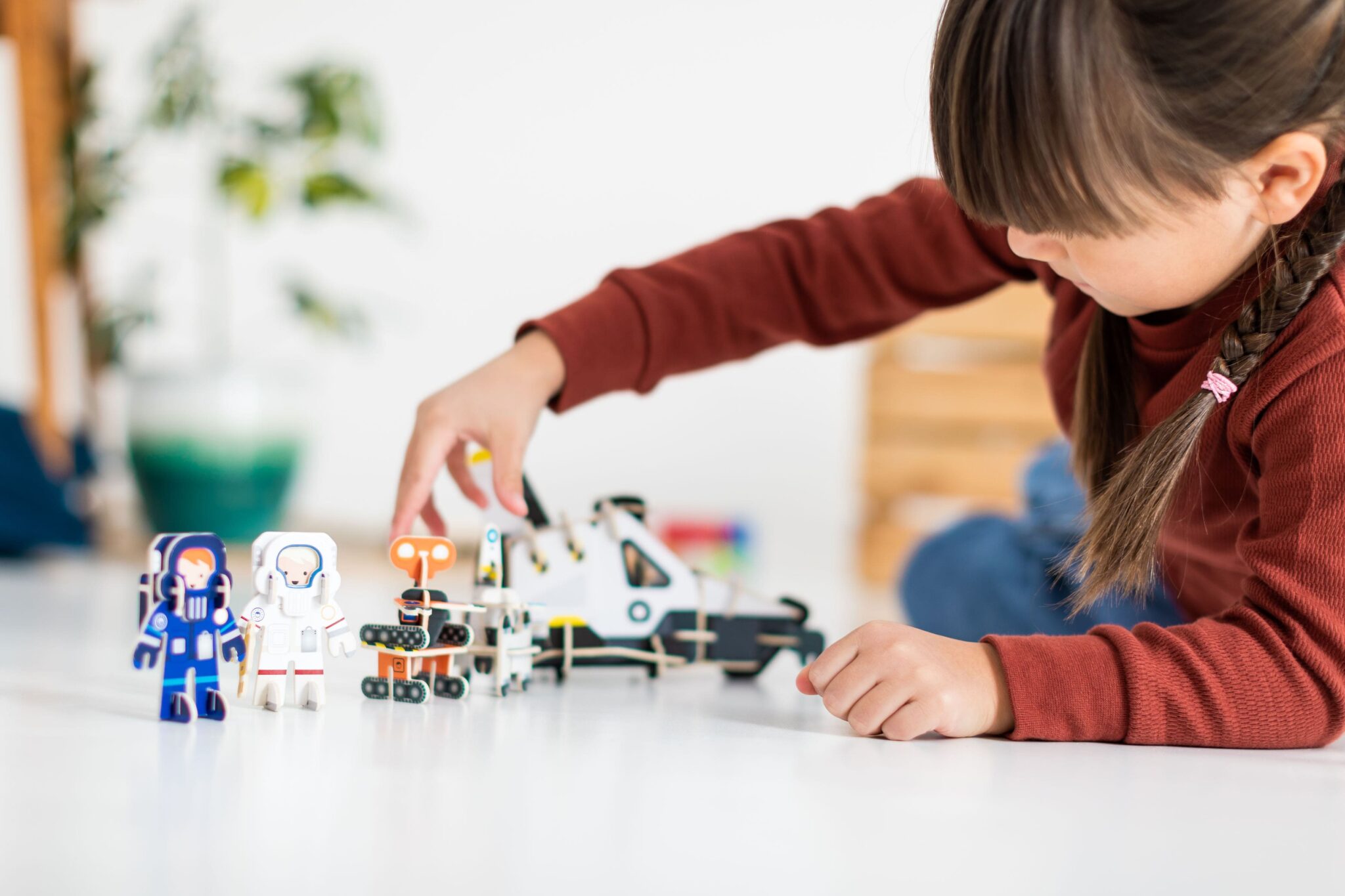
Games and puzzles are proof that learning does not have to feel like a lesson. A toddler fitting together their first jigsaw and a family playing a lively board game are both finding ways to think, experiment and enjoy time together.
The trick is choosing activities that suit the child’s stage and leave plenty of room for fun.
What are the best first puzzles for toddlers?
Chunky board puzzles, simple matching games and puzzles with only a few large pieces are helpful starting points. Toddlers can explore shapes and pictures as they work out where each piece belongs.
As they become more confident, try jigsaws with more pieces, animal themes or favourite characters. Children often enjoy repeating the same puzzle, especially when they can see their own progress.
Choose sturdy pieces that are appropriate for the child’s age, and keep puzzles intended for older children away from babies and toddlers.
Educational games for growing minds
Different games invite different kinds of thinking. Matching games encourage attention and memory, while counting and number games create playful opportunities to practise early maths.
Alphabet games, spelling activities and games about telling the time can be introduced when a child is ready. Children in primary school might enjoy puzzles and games that build on topics they are learning at school, without making playtime feel like homework.
It can be useful to let children explain their own rules or strategies. The conversation is often as valuable as finishing the game.
Bring everyone together with family games
Traditional games such as Snakes and Ladders, Ludo, dominoes and bingo remain popular because they are easy to share across generations. Simple card games and matching activities also work well for relaxed family time.
Games create opportunities to practise turn-taking and coping with the excitement of winning and losing. For younger children, keeping rounds short and celebrating participation helps everyone enjoy themselves.
Screen-free fun for journeys and rainy days
Compact games, travel puzzles, playing cards and smaller jigsaws are handy to have nearby on holidays or wet afternoons. You can also revisit traditional favourites such as skittles, marble runs and simple balancing games.
Frequently asked question: Do puzzles help children develop skills? Puzzles can provide opportunities to practise observation, matching, problem-solving and hand-eye coordination, especially when the level of challenge is right for the child.
Explore more ideas for puzzles, traditional toys and family games with Ebb & Flow Kids.